.svg)
Table of Contents

Most people have used a website like Amazon to make a purchase at least once in their lives. When you view an item on Amazon, you can see recommendations for products that are similar or complementary to the one you are interested in. This tactic is called cross-selling.
But how do you define cross-selling? Cross-selling is a sales tactic that involves recommending similar, related, or complementary products to a customer who is about to make a purchase. The goal of cross-selling, like any other sales tactic, is to increase the total number of sales.
Of course, it is not just about optimizing revenue. A company's main product line usually has a fairly low profit margin. Companies use these products as gateways to sell more accessories.
Consequently, complementary items tend to have a higher profit margin than the base product.
For example, take a company that sells printers at a low profit margin. After selling the printer, the company will recommend ink cartridges and paper, which are essential for using it. As a result, the company can significantly increase its profit.
Anyone starting an e-commerce business can learn a lot from successful companies, particularly by integrating cross-selling into their strategy.
But there are many ways to include cross-selling in your business. You can use a recommendations section, email marketing, SMS marketing, and much more.
So, let's take a look at some companies that are using cross-selling the right way!
1. Amazon – Frequently bought together products
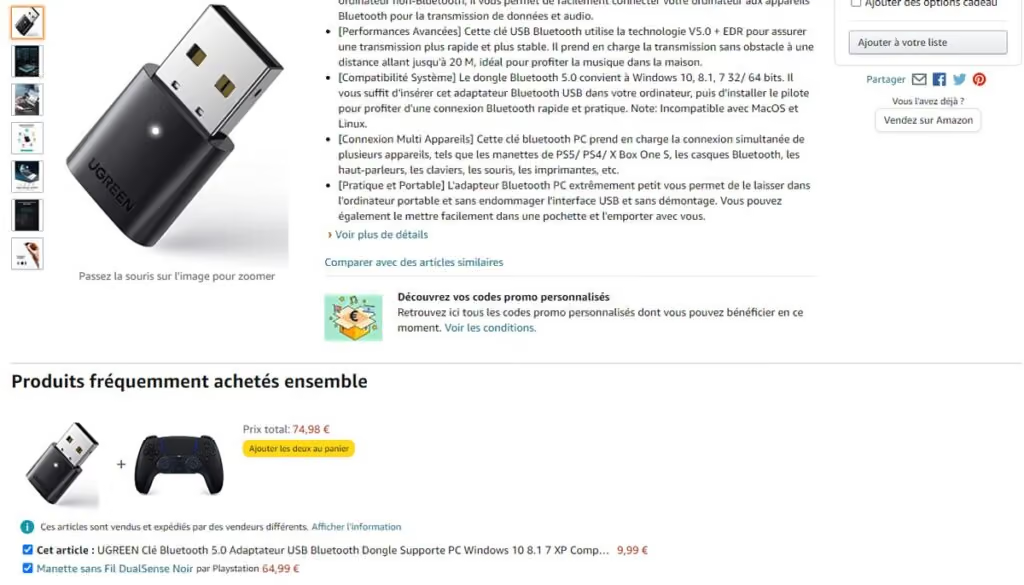
It is no surprise that Amazon, a company known to everyone, excels at cross-selling.
As soon as you view a product page on Amazon, you can see items that other customers also bought.
Customers tend to be more receptive to decisions made by other shoppers, which encourages them to purchase the same products. Amazon’s cross-selling recommendations are generally relevant, thanks to their massive database containing customer activity.
Thanks to this data, they can offer precise and relevant deals.
2. Target – Frequently Bought Together
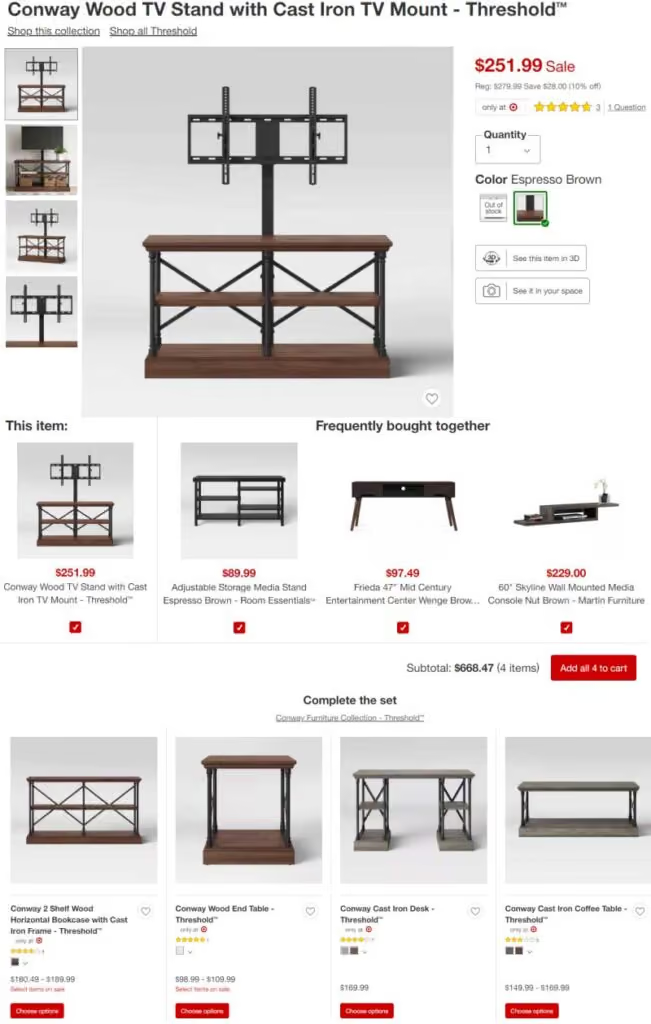
Target is another company that specializes in cross-selling, using multiple channels to convince customers to add a little something extra to their purchase.
First, Target has implemented the famous “Frequently bought together” category. This section gives the customer a glimpse of what other shoppers are choosing.
In addition to this, they also offer a “Complete the set” section, which encourages customers to buy complementary accessories to get the most out of their initial product. These two categories work together to ensure more add-on purchases.
3. Apple – The Essentials. And Much More
Apple is one of the largest companies in the world, known for its cross-selling tactics, but especially for its accessories.
Apple is nothing without its ecosystem: customers need to become dependent on their Apple products.
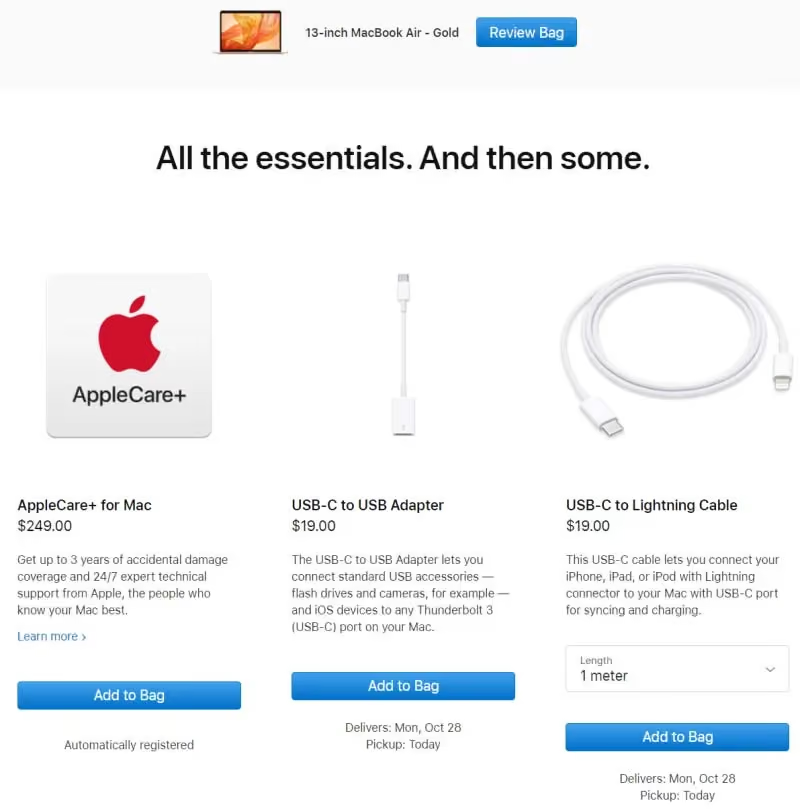
This is why Apple uses its primary products, such as the iPhone, as a gateway to the entire ecosystem. To take advantage of all the features that Apple products offer, you need to buy accessories.
That is why, when you view your cart on their site, Apple suggests a few accessories that will provide you with a better experience with the product. This method is a clear and simple example of cross-selling.
4. Vans – You Might Also Like
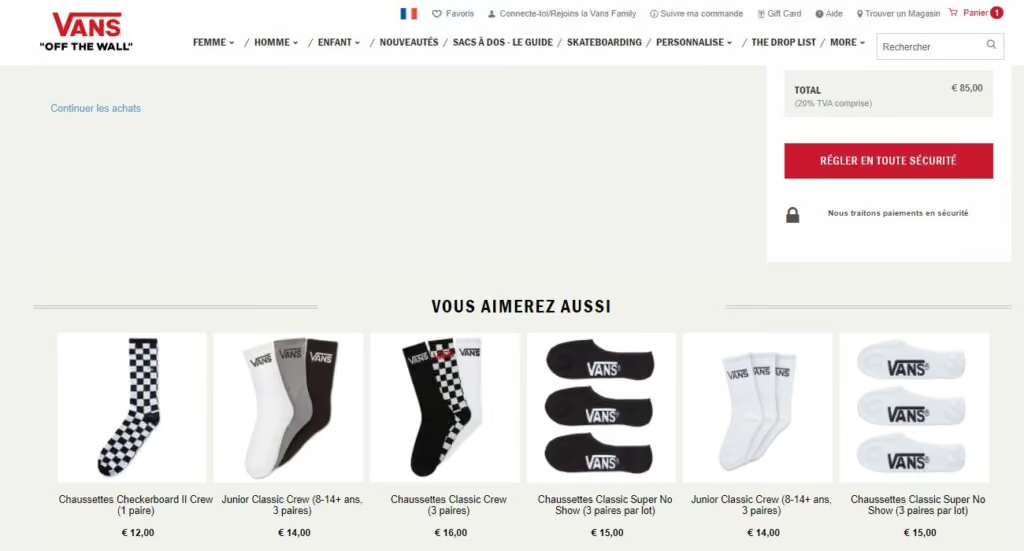
Vans is a street fashion brand known for its sneakers, but it also sells clothing and various accessories.
Just before you check out on their website, Vans gives you the option to add an accessory to your cart. They suggest additional products. These recommended items are generally very affordable, and the customer may decide to pay a little extra to get them.
5. Dollar Shave Club – Toss More in Before You Ship
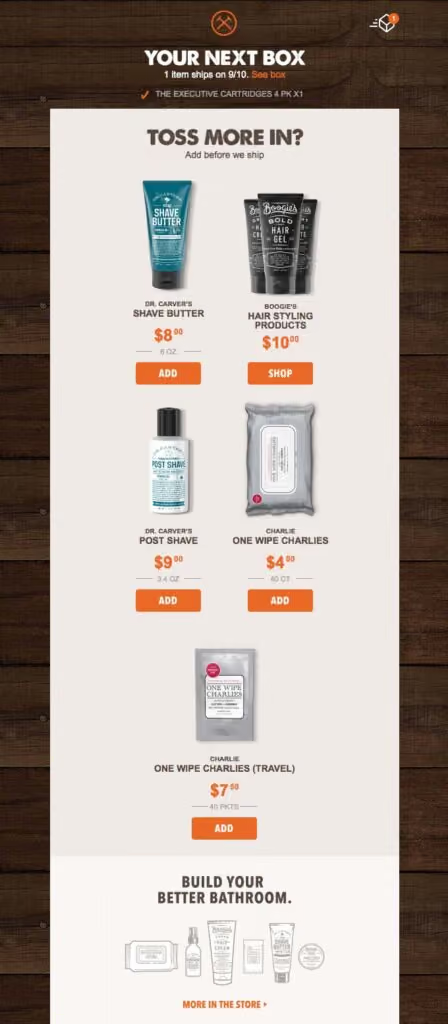
Dollar Shave Club is a well-known subscription service that sends you a shaving kit once a month at an affordable price. You can customize your shaving kit according to your needs.
Each month, just before shipping your shaving kit, Dollar Shave Club emails you a list of products you can add to your kit to improve your shaving experience. This email explains how to do it and creates a sense of urgency for the customer.
As a result, there is a higher likelihood that they will add products to their cart.
6. IKEA – Combine with
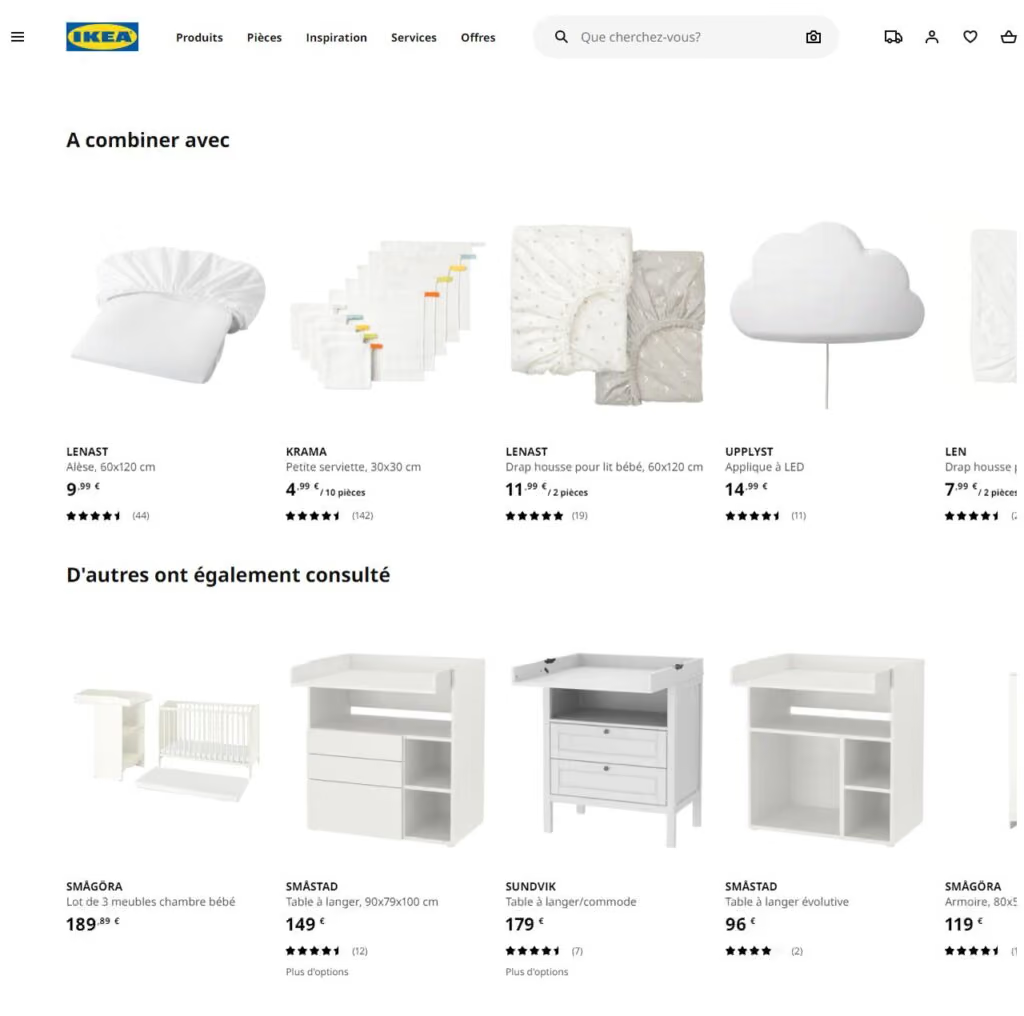
We all know and love IKEA, the go-to for affordable, quality furniture. One of the keys to IKEA’s success is its ability to make cross-selling easy and customer-centric.
IKEA uses a combination of SMS marketing and product bundling to sell more items. People often struggle to find a matching furniture set. IKEA simplifies the process by grouping its furniture into sets. If a customer likes a bed from a specific collection, they are likely to buy the matching nightstand as well.
Furthermore, IKEA sends SMS messages to customers as soon as a new item is added to a set or a new collection becomes available, which helps capture customer attention and boost sales.
Using SMS to advertise products can be a strategy for new e-commerce sites to consider in order to improve their performance.
7. Sephora – In the same range
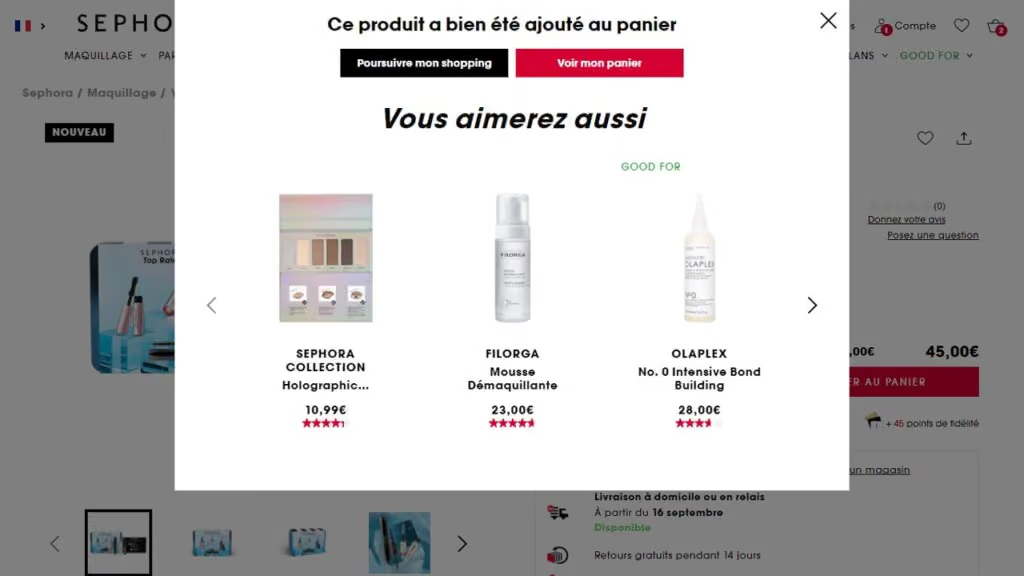
Sephora is a cosmetics retailer offering over 300 brands on its website. With so many products in its catalog, cross-selling items in bundles can be tricky. However, Sephora uses an innovative tactic to overcome this.
Sephora offers product bundles to customers, but once a week, customers can add the items they want to these bundles, provided they follow specific rules. This option encourages customers to purchase bundles containing their favorite products at a discounted price.

8. Heroku – Try Popular Add-Ons
Heroku is a development platform company that uses email to cross-sell extensions for its services.
Cloud-hosted services have very high cross-selling potential. You can sell numerous add-ons that fundamentally change the experience of your service. In Heroku’s case, all their add-ons are free. Even if this doesn't directly increase revenue, it improves engagement with the brand and the product.
9. REI – Complementary Items
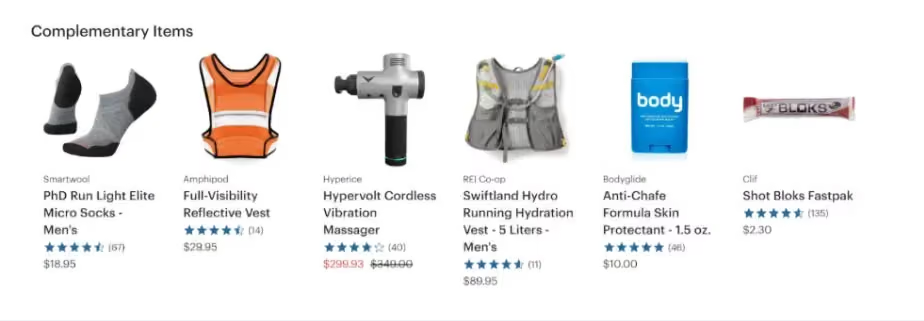
REI is a brand dedicated to outdoor enthusiasts, selling clothing, footwear, backpacks, and many other accessories.
REI takes a very direct approach to cross-selling by displaying a list of complementary items below the main product. This method encourages the customer to buy the accessories needed to complete the set.
REI also maintains a database containing all purchase history. This allows them to provide precise and relevant recommendations to their customers.
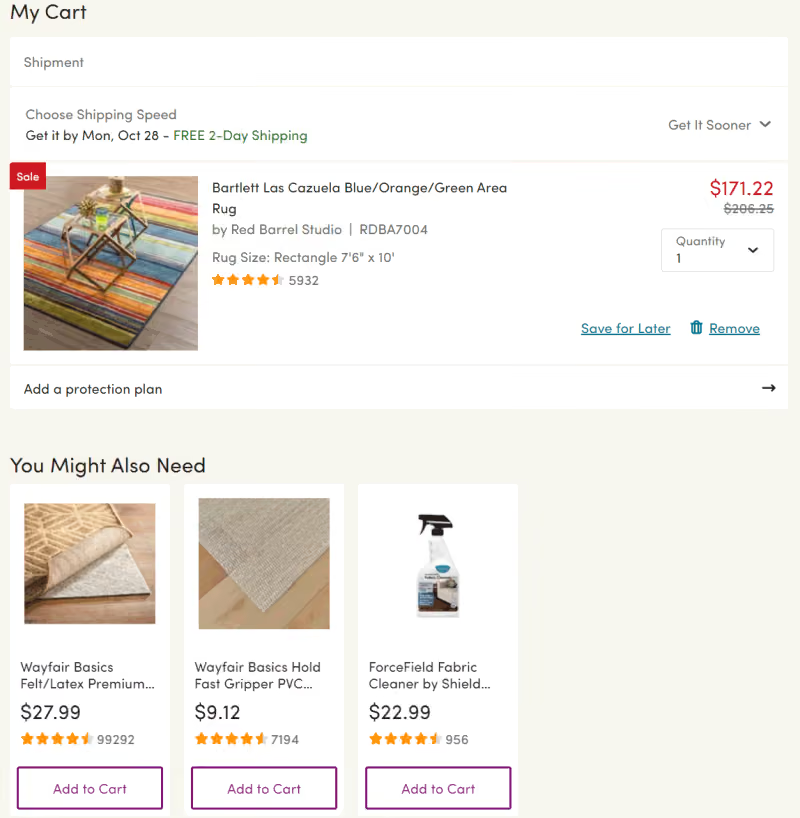
10. Wayfair – You Might Also Need
Wayfair is a massive online marketplace that offers a wide variety of products on its website. Like any e-commerce site, they store the preferences and shopping habits of every customer.
Wayfair uses the most classic cross-selling method: a "You might also need" section under each of their product pages. The recommendations are generated using data recorded by Wayfair and are therefore generally relevant. As a result, customers tend to add a few extra items to their cart.
Use Cross-Selling Your Way
All companies generally use similar tactics to sell more products and services, but each of these strategies differs slightly from the others.
The key is to find what works best for your brand. Email marketing and recommendation sections are standard practices. If you want to stand out from the crowd and drive more engagement, you can use other strategies, such as SMS marketing.
This type of marketing has a hugeamount of potential, especially in growing industries like gaming, SaaS, and online travel.
To include SMS promotions in your product cross-selling plan, don't forget to check out our Prestashop Addon, WooCommerce, and Magento extensions for SMS. They are easy to implement!
Prestashop addonWoocommerce extensionMagento extension
Or in the Prestashop store, Magento Marketplace, and in the WordPress Plugins.
Increase your sales through SMS marketing campaigns by cross-selling related products or services. You can create personalized messages based on specific criteria such as product category or time of day!