.svg)
Table of Contents

A distribution channel can be defined as the method an entrepreneur chooses to reach their target audience. For the message to reach the end consumer, it must effectively promote the right model for their business to ensure the success of their marketing campaign. With an infinite number of options, what are the best channels to adopt? More importantly, how do you choose them to reach your business goals more easily?
Understanding your target audience
The first step in choosing your distribution channels is to know your target audience in depth. What is your target customer like, and what are their expectations? The channel must be selected based on the profile of each consumer. Understanding their needs and observing their purchasing behaviors remain paramount.
To achieve this, you can create personas and identify your buyers. You can brainstorm, create a list of preferences that align with your personas, and determine their professional backgrounds and personal situations. Collecting data on your customers' preferences will also help you in this process.
Identifying potential distribution channels
The next step is to determine the potential distribution channels that can meet your company's expectations. In media marketing, there are several common channels.
Cross-channel
This distribution channel can be described as a strategy that deploys multiple channels. The goal is to make them complementary. Unlike a multi-channel approach, each one is not used independently.
It allows you to benefit from affordable costs and personalize customer support.
Omnichannel
This channel is a combination of digital methods and more traditional techniques. It allows for a more fluid distribution of messages and offers consumers a consistent experience, particularly because it adapts to their journey. The connection with the customer will be more engaged.
Email marketing
Highly powerful, this is one of the most popular channels for businesses. It simply involves using emails to promote your company's services or products. It allows you to build a personalized relationship with the customer. However, it must be engaging and concise, yet relevant to capture the target audience's attention.
SMS marketing
This channel uses text messages to promote products and services. Sometimes, SMS marketing can also involve transactional messages, such as healthcare professionals sending appointment reminders. Direct, fast, and inexpensive—these are all great reasons to choose it.
Display advertising
This channel takes the form of advertising space found, for example, on a website. It can be a short video, a banner, or other types of graphic design. Its strength lies in its attractive format. It succeeds more than other channels in quickly grabbing the attention of internet users.
Aligning channels with your business goals
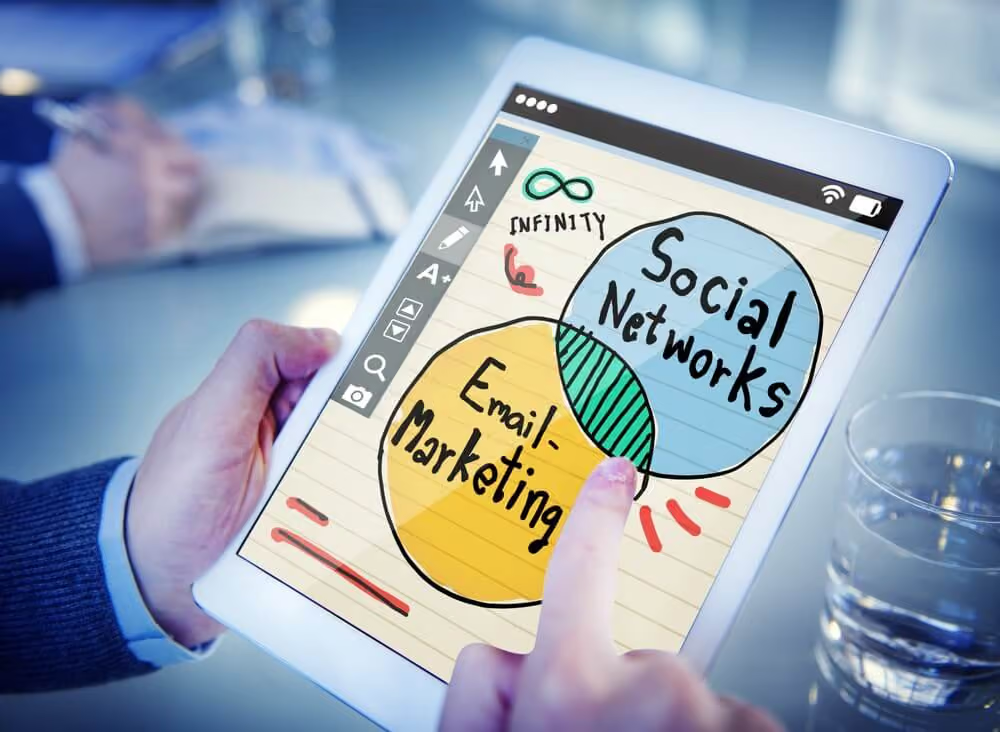
The selection of your distribution channel will also be influenced by your business goals. You may need to adopt different channels for customer acquisition and retention. For lead generation, for example, or to improve your company's brand awareness, you might use social media. Conversely, to build customer loyalty, you might consider email marketing.
Budget and resources
The budget to allocate should not be overlooked when selecting your distribution channels. If you have the necessary funds, you can use a third party, which will save you a significant amount of time and energy. Furthermore, it will provide you with greater reliability, especially regarding logistics.

Start by estimating the costs to see if your budget allows for your chosen approach. The same applies to available resources. It is important to evaluate them to ensure the performance of your chosen channel.
Performance measurement and analysis
Performance measurement and analysis also come into play when choosing your marketing distribution channels. You can use dedicated tools for this purpose and refine your marketing strategy based on the results.